
Nuts
Kola Nut
Kola nuts are caffeine-rich seeds of Cola acuminata and Cola nitida from West African rainforests, central to hospitality, ritual, and trade long before soft drinks borrowed the name. Split fresh or dried, the chew starts bitter-astringent then turns sweetish; the point is stimulation and social exchange, not pie garnish. Industrial extracts once flavoured early colas; modern sodas usually use other caffeine sources while fresh kola remains culturally vital in West Africa. Fresh nuts are perishable; dried stock wants cool, dry holding. Good kolas are firm, aromatic, and free of mould; soft sour nuts fail ceremonial and flavour use. Do not swap kola for mild baking nuts in Western pastry. Treat as a stimulant seed—not a children’s trail mix item—and respect caffeine content.
Track this ingredient
Cuts & parts
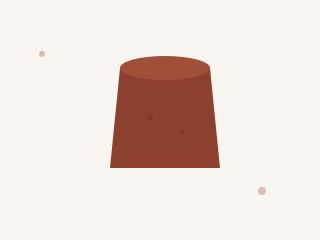
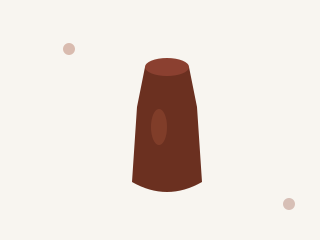

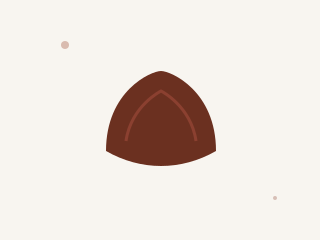
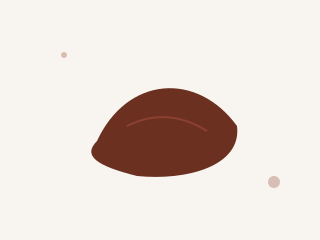
Breeds & varieties
A sample of named types with their own origin and culinary profiles.


Characteristics
Preparations
Provenance
Sources
Traits
Nutrition and pairings
Nutrition
Typical values per 100 g edible portion. Nutrient names open the reference page.
Nutrition Facts
Per 100 g edible portion
Amount per 100 g
- Total Fat 54.1 g
- Saturated Fat 6.71 g
- Trans Fat 0 g
- Monounsaturated Fat 30 g
- Polyunsaturated Fat 14.3 g
- Cholesterol 0 mg
- Sodium 4.92 mg
- Salt 0.01 g
- Total Carbohydrate 17.2 g
- Dietary Fibre 7.88 g
- Total Sugars 4.3 g
- Complex / starch 4.63 g
- Protein 18.5 g
- Water 4.22 g
- Energy 561 kcal
- Water 4.22 g
- Carbohydrates 17.2 g
- Sugars 4.3 g
- Monosaccharides 3.02 g
- Disaccharides 1.3 g
- Starch 4.63 g
- Amylose 1.16 g
- Amylopectin 3.47 g
- Digestible Starch 3.94 g
- Resistant Starch 0.46 g
- Fibre 7.88 g
- Soluble Fibre 2.76 g
- Insoluble Fibre 5.12 g
- Protein 18.5 g
- Plant Protein 17.6 g
- Fat 54.1 g
- Saturated Fat 6.71 g
- Monounsaturated Fat 30 g
- Polyunsaturated Fat 14.3 g
- Vitamins 81.3 mg
- Vitamin A 20 µg
- Vitamin B1 — Thiamine 0.18 mg
- Vitamin B2 — Riboflavin 0.13 mg
- Vitamin B3 — Niacin 1.77 mg
- Vitamin B5 — Pantothenic Acid 0.44 mg
- Vitamin B6 0.13 mg
- Vitamin B7 — Biotin 12.8 µg
- Vitamin B9 — Folate 33.8 µg
- Vitamin C 2 mg
- Vitamin E 4.13 mg
- Vitamin K 5.9 µg
- Minerals 308 mg
- Major Minerals 299 mg
- Trace Minerals 9.4 mg
- Salt 0.01 g
- Sodium Chloride 0.01 g
Vitamins
vitamin-c: 2 · vitamin-a: 20 · vitamin-b1-thiamine: 0.18 · vitamin-b2-riboflavin: 0.13 · vitamin-b3-niacin: 1.77 · vitamin-b5-pantothenic-acid: 0.44 · vitamin-b6: 0.13 · vitamin-b7-biotin: 12.8 · vitamin-b9-folate: 33.8 · vitamin-e: 4.13 · vitamin-k: 5.9 ·
Minerals
Sodium: 4.92 · Potassium: 247 · Calcium: 47 · Iron: 1.2 · Zinc: 3.2 · Iodine: 5 ·
Nuts pack energy-dense oils, plant protein, and fibre; sodium stays low until salted.
History
West African societies used kola in trade, ritual, and social greeting long before colonial soft drinks.
Kola trade networks linked forest producers with Sahelian and coastal markets.
Early cola beverages drew on kola flavour and caffeine associations in their origin stories.
Fresh kola remains culturally central in West Africa while global soft drinks use other caffeine sources.