
Nuts
Kernel
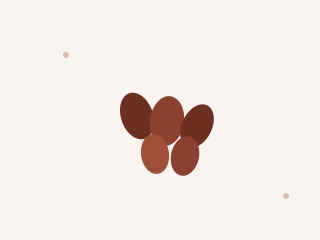
Kola kernels are the caffeine-rich seed interiors split for West African hospitality chews and historical flavour extracts—not pie nuts. Taste starts bitter-astringent then turns sweetish. Fresh kolas are perishable; dried stock wants cool dry holding. Good kernels are firm and aromatic; soft sour ones fail ceremonial use. Caffeine is real—treat as stimulant food, not anonymous baking chips or children’s snacks.
Track this ingredient
Cuts & parts
Characteristics
Preparations
Traits
Nutrition and pairings
Nutrition
Typical values per 100 g edible portion. Nutrient names open the reference page.
Nutrition Facts
Per 100 g edible portion
Amount per 100 g
- Total Fat 1.5 g
- Saturated Fat 0.32 g
- Trans Fat 0 g
- Monounsaturated Fat 0.63 g
- Polyunsaturated Fat 0.55 g
- Cholesterol 0 mg
- Sodium 5.2 mg
- Salt 0.01 g
- Total Carbohydrate 78 g
- Dietary Fibre 10 g
- Total Sugars 6 g
- Complex / starch 45 g
- Protein 8 g
- Water 10 g
- Energy 358 kcal
- Water 10 g
- Carbohydrates 78 g
- Protein 8 g
- Fat 1.5 g
- Saturated Fat 0.32 g
- Monounsaturated Fat 0.63 g
- Polyunsaturated Fat 0.55 g
- Omega-3 0.04 g
- Vitamins 87.5 mg
- Vitamin A 15 µg
- Vitamin B1 — Thiamine 0.22 mg
- Vitamin B2 — Riboflavin 0.16 mg
- Vitamin B3 — Niacin 2.15 mg
- Vitamin B5 — Pantothenic Acid 0.53 mg
- Vitamin B6 0.16 mg
- Vitamin B7 — Biotin 15.7 µg
- Vitamin B9 — Folate 41.5 µg
- Vitamin C 2 mg
- Vitamin E 5.09 mg
- Vitamin K 5 µg
- Minerals 269 mg
- Major Minerals 267 mg
- Trace Minerals 1.5 mg
- Iron 1.5 mg
- Salt 0.01 g
Vitamins
vitamin-c: 2 · vitamin-a: 15 · vitamin-b1-thiamine: 0.22 · vitamin-b2-riboflavin: 0.16 · vitamin-b3-niacin: 2.15 · vitamin-b5-pantothenic-acid: 0.53 · vitamin-b6: 0.16 · vitamin-b7-biotin: 15.7 · vitamin-b9-folate: 41.5 · vitamin-e: 5.09 · vitamin-k: 5 ·
Minerals
Kola nut: caffeine-bearing seed, carbohydrate-dominant rather than oily.
History
West African societies used kola in trade, ritual, and social greeting long before colonial soft drinks.
Kola trade networks linked forest producers with Sahelian and coastal markets.
Early cola beverages drew on kola flavour and caffeine associations in their origin stories.
Fresh kola remains culturally central in West Africa while global soft drinks use other caffeine sources.