
Nuts
Whole
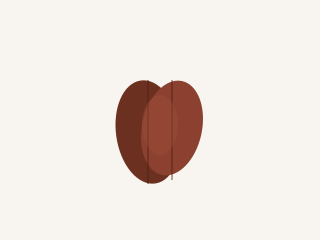
Whole kola nut means the intact harvested product of the caffeine-rich seed of Cola species native to West African rainforests as traded in-shell or as unbroken shelled units. Buying whole gives control over roasting and grind size compared with pre-ground meal of unknown age. When cracked fresh, flavour should be bitter-astringent then sweetish, used as a chew and flavour extract more than a baking nut. Geographic story: West Africa, with deep ceremonial and social importance. Kitchen uses include West African hospitality chews and historical soft-drink flavouring extracts. Handling: split and chew fresh or dried; extracts for beverages are industrial specialities. Storage: fresh kolas are perishable; dried keep cooler and drier. Caffeine content is real; treat as a stimulant food, not an anonymous baking chip. Allergen: stimulant seed—not a mild children’s snack nut. In comparison terms, culturally closer to stimulant plants than to pecan pie nuts. Reject mouldy, insect-damaged, or paint-smelling lots before they enter pastry.
Track this ingredient
Cuts & parts
Characteristics
Preparations
Traits
Nutrition and pairings
Nutrition
Typical values per 100 g edible portion. Nutrient names open the reference page.
Nutrition Facts
Per 100 g edible portion
Amount per 100 g
- Total Fat 52.2 g
- Saturated Fat 6.61 g
- Trans Fat 0 g
- Monounsaturated Fat 27.4 g
- Polyunsaturated Fat 14.3 g
- Cholesterol 0 mg
- Sodium 4.94 mg
- Salt 0.01 g
- Total Carbohydrate 17.1 g
- Dietary Fibre 7.76 g
- Total Sugars 4.15 g
- Complex / starch 5.15 g
- Protein 18.8 g
- Water 4.09 g
- Energy 613 kcal
- Water 4.09 g
- Carbohydrates 17.1 g
- Protein 18.8 g
- Fat 52.2 g
- Saturated Fat 6.61 g
- Monounsaturated Fat 27.4 g
- Polyunsaturated Fat 14.3 g
- Omega-3 1.43 g
- Vitamins 94.1 mg
- Vitamin A 15 µg
- Vitamin B1 — Thiamine 0.17 mg
- Vitamin B2 — Riboflavin 0.12 mg
- Vitamin B3 — Niacin 2.35 mg
- Vitamin B5 — Pantothenic Acid 0.58 mg
- Vitamin B6 0.17 mg
- Vitamin B7 — Biotin 17.2 µg
- Vitamin B9 — Folate 45.4 µg
- Vitamin C 2 mg
- Vitamin E 5.58 mg
- Vitamin K 5.5 µg
- Minerals 366 mg
- Major Minerals 365 mg
- Trace Minerals 1.5 mg
- Iron 1.5 mg
- Salt 0.01 g
Vitamins
vitamin-c: 2 · vitamin-a: 15 · vitamin-b1-thiamine: 0.17 · vitamin-b2-riboflavin: 0.12 · vitamin-b3-niacin: 2.35 · vitamin-b5-pantothenic-acid: 0.58 · vitamin-b6: 0.17 · vitamin-b7-biotin: 17.2 · vitamin-b9-folate: 45.4 · vitamin-e: 5.58 · vitamin-k: 5.5 ·
Minerals
Whole form averages edible parts as typically consumed.
History
West African societies used kola in trade, ritual, and social greeting long before colonial soft drinks.
Kola trade networks linked forest producers with Sahelian and coastal markets.
Early cola beverages drew on kola flavour and caffeine associations in their origin stories.
Fresh kola remains culturally central in West Africa while global soft drinks use other caffeine sources.