
Nuts
Mongongo
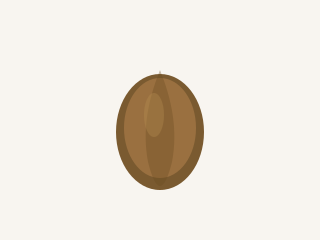
Mongongo is the nutritious nut of Schinziophyton rautanenii from Kalahari and surrounding southern African woodlands, a calorie-dense wild staple for San and neighbouring peoples long before specialty export. Hard shells crack to rich, oily meats eaten roasted or pressed for food fat. Flavour is distinctive and hearty rather than mild supermarket almond. Supply remains wild or smallholder, not industrial orchard scale, so respect cultural food context and limited volumes. Once shelled, high oil means cool storage or quick use. Good freshly cracked meats smell clean and rich; varnish rancidity or insect damage disqualifies lots. Modern niche oils and kernels reach gourmet markets in small lots. Treat as a tree-nut style oilseed and specialty import.
Track this ingredient
Cuts & parts
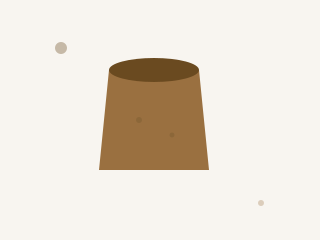
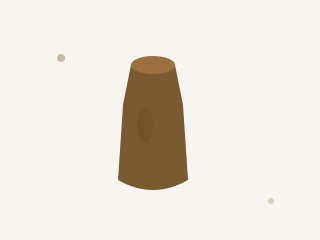

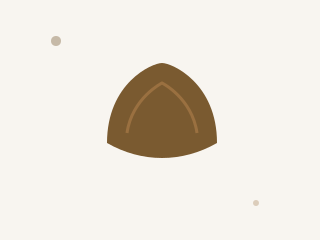
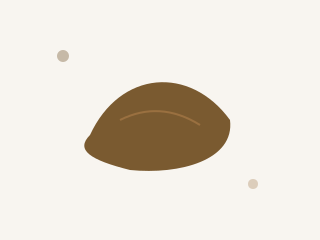
Breeds & varieties
A sample of named types with their own origin and culinary profiles.


Characteristics
Preparations
Provenance
Sources
Traits
Nutrition and pairings
Nutrition
Typical values per 100 g edible portion. Nutrient names open the reference page.
Nutrition Facts
Per 100 g edible portion
Amount per 100 g
- Total Fat 53 g
- Saturated Fat 6.59 g
- Trans Fat 0 g
- Monounsaturated Fat 25.9 g
- Polyunsaturated Fat 14.4 g
- Cholesterol 0 mg
- Sodium 4.73 mg
- Salt 0.01 g
- Total Carbohydrate 17.3 g
- Dietary Fibre 7.71 g
- Total Sugars 4.21 g
- Complex / starch 5.25 g
- Protein 19 g
- Water 4.13 g
- Energy 623 kcal
- Water 4.13 g
- Carbohydrates 17.3 g
- Sugars 4.21 g
- Monosaccharides 2.94 g
- Disaccharides 1.26 g
- Starch 5.25 g
- Amylose 1.31 g
- Amylopectin 3.94 g
- Digestible Starch 4.46 g
- Resistant Starch 0.53 g
- Fibre 7.71 g
- Soluble Fibre 2.7 g
- Insoluble Fibre 5.01 g
- Protein 19 g
- Plant Protein 18 g
- Fat 53 g
- Saturated Fat 6.59 g
- Monounsaturated Fat 25.9 g
- Polyunsaturated Fat 14.4 g
- Vitamins 81.6 mg
- Vitamin A 20 µg
- Vitamin B1 — Thiamine 0.19 mg
- Vitamin B2 — Riboflavin 0.14 mg
- Vitamin B3 — Niacin 1.83 mg
- Vitamin B5 — Pantothenic Acid 0.45 mg
- Vitamin B6 0.13 mg
- Vitamin B7 — Biotin 13.3 µg
- Vitamin B9 — Folate 35.1 µg
- Vitamin C 2 mg
- Vitamin E 4.29 mg
- Vitamin K 4.2 µg
- Minerals 241 mg
- Major Minerals 233 mg
- Trace Minerals 8.3 mg
- Salt 0.01 g
- Sodium Chloride 0.01 g
Vitamins
vitamin-c: 2 · vitamin-a: 20 · vitamin-b1-thiamine: 0.19 · vitamin-b2-riboflavin: 0.14 · vitamin-b3-niacin: 1.83 · vitamin-b5-pantothenic-acid: 0.45 · vitamin-b6: 0.13 · vitamin-b7-biotin: 13.3 · vitamin-b9-folate: 35.1 · vitamin-e: 4.29 · vitamin-k: 4.2 ·
Minerals
Sodium: 4.73 · Potassium: 184 · Calcium: 44 · Iron: 0.9 · Zinc: 2.4 · Iodine: 5 ·
Nuts pack energy-dense oils, plant protein, and fibre; sodium stays low until salted.
History
Peoples of southern African woodlands relied on mongongo nuts as a calorie-dense wild staple.
Ethnographic records documented mongongo’s central role in Kalahari diets.
Development and specialty-food projects explored mongongo oil and kernels for wider markets.