
Nuts
Whole
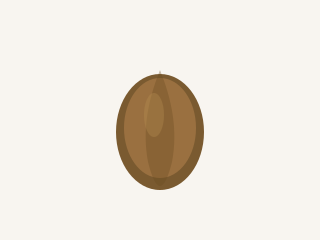
Whole mongongo means the intact harvested product of the nutritious nut of Schinziophyton rautanenii from southern African woodlands as traded in-shell or as unbroken shelled units. Buying whole gives control over roasting and grind size compared with pre-ground meal of unknown age. When cracked fresh, flavour should be rich, oily, and distinctive—traditional staple snack of San and other regional peoples. Geographic story: Kalahari and surrounding southern African regions. Kitchen uses include southern African traditional foods and modern specialty exports in small volumes. Handling: hard shells cracked traditionally; kernels eaten roasted or pressed. Storage: high oil—keep cool after shelling. Respect cultural food context; supply is wild or smallholder, not industrial orchard scale. Allergen: tree-nut style oilseed; specialty import. In comparison terms, a cultural staple nut of the Kalahari, not a supermarket bulk nut. Reject mouldy, insect-damaged, or paint-smelling lots before they enter pastry.
Track this ingredient
Cuts & parts
Characteristics
Preparations
Traits
Nutrition and pairings
Nutrition
Typical values per 100 g edible portion. Nutrient names open the reference page.
Nutrition Facts
Per 100 g edible portion
Amount per 100 g
- Total Fat 53.7 g
- Saturated Fat 6.81 g
- Trans Fat 0 g
- Monounsaturated Fat 27 g
- Polyunsaturated Fat 14.7 g
- Cholesterol 0 mg
- Sodium 5.25 mg
- Salt 0.01 g
- Total Carbohydrate 17.9 g
- Dietary Fibre 7.87 g
- Total Sugars 4.15 g
- Complex / starch 5.22 g
- Protein 18.1 g
- Water 4.2 g
- Energy 569 kcal
- Water 4.2 g
- Carbohydrates 17.9 g
- Protein 18.1 g
- Fat 53.7 g
- Saturated Fat 6.81 g
- Monounsaturated Fat 27 g
- Polyunsaturated Fat 14.7 g
- Omega-3 1.47 g
- Vitamins 82.3 mg
- Vitamin A 15 µg
- Vitamin B1 — Thiamine 0.2 mg
- Vitamin B2 — Riboflavin 0.15 mg
- Vitamin B3 — Niacin 2 mg
- Vitamin B5 — Pantothenic Acid 0.49 mg
- Vitamin B6 0.15 mg
- Vitamin B7 — Biotin 14.5 µg
- Vitamin B9 — Folate 38.4 µg
- Vitamin C 2 mg
- Vitamin E 4.7 mg
- Vitamin K 4.7 µg
- Minerals 251 mg
- Major Minerals 249 mg
- Trace Minerals 1.5 mg
- Iron 1.5 mg
- Salt 0.01 g
Vitamins
vitamin-c: 2 · vitamin-a: 15 · vitamin-b1-thiamine: 0.2 · vitamin-b2-riboflavin: 0.15 · vitamin-b3-niacin: 2 · vitamin-b5-pantothenic-acid: 0.49 · vitamin-b6: 0.15 · vitamin-b7-biotin: 14.5 · vitamin-b9-folate: 38.4 · vitamin-e: 4.7 · vitamin-k: 4.7 ·
Minerals
Whole form averages edible parts as typically consumed.
History
Peoples of southern African woodlands relied on mongongo nuts as a calorie-dense wild staple.
Ethnographic records documented mongongo’s central role in Kalahari diets.
Development and specialty-food projects explored mongongo oil and kernels for wider markets.