
Vegetable
Runner Bean
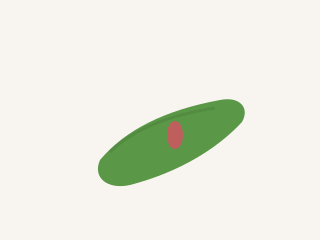
Runner bean (Phaseolus coccineus) is a vigorous climbing bean grown for long, flat green pods—scarlet runner is the familiar garden type with red flowers and bold pods. Young pods are sliced and boiled or steamed until just tender; older pods turn stringy and fibrous. Flavour is greener and more “beany” than dwarf French beans, with a soft flesh once cooked. British and Central American kitchen gardens made runner beans a summer staple; dried mature seeds are also edible as a large white or mottled bean. Top, tail, and remove side strings before cooking. Serve with butter, garlic, tomatoes, or in mixed bean salads. Pick small and often—pods lengthen fast and quality drops once seeds bulge hard inside.
Track this ingredient
Cuts & parts
Breeds & varieties
A sample of named types with their own origin and culinary profiles.


Characteristics
Preparations
Provenance
Sources
Traits
Nutrition and pairings
Nutrition
Typical values per 100 g edible portion. Nutrient names open the reference page.
Nutrition Facts
Per 100 g edible portion
Amount per 100 g
- Total Fat 0.3 g
- Saturated Fat 0.05 g
- Trans Fat 0 g
- Monounsaturated Fat 0.05 g
- Polyunsaturated Fat 0.16 g
- Cholesterol 0 mg
- Sodium 18.9 mg
- Salt 0.05 g
- Total Carbohydrate 7.05 g
- Dietary Fibre 2.43 g
- Total Sugars 3.12 g
- Complex / starch 1.96 g
- Protein 2 g
- Water 95.4 g
- Energy 34.6 kcal
- Water 95.4 g
- Carbohydrates 7.05 g
- Sugars 3.12 g
- Monosaccharides 2.18 g
- Disaccharides 0.94 g
- Starch 1.96 g
- Amylose 0.49 g
- Amylopectin 1.47 g
- Digestible Starch 1.67 g
- Resistant Starch 0.2 g
- Fibre 2.43 g
- Soluble Fibre 0.85 g
- Insoluble Fibre 1.58 g
- Protein 2 g
- Plant Protein 1.9 g
- Fat 0.3 g
- Saturated Fat 0.05 g
- Monounsaturated Fat 0.05 g
- Polyunsaturated Fat 0.16 g
- Vitamins 126 mg
- Vitamin A 20 µg
- Vitamin B1 — Thiamine 0.07 mg
- Vitamin B2 — Riboflavin 0.09 mg
- Vitamin B3 — Niacin 0.69 mg
- Vitamin B5 — Pantothenic Acid 0.34 mg
- Vitamin B6 0.17 mg
- Vitamin B7 — Biotin 1.7 µg
- Vitamin B9 — Folate 33.4 µg
- Vitamin C 42 mg
- Vitamin E 0.44 mg
- Vitamin K 27.1 µg
- Minerals 519 mg
- Major Minerals 513 mg
- Trace Minerals 6.6 mg
- Salt 0.05 g
- Sodium Chloride 0.05 g
Vitamins
vitamin-c: 42 · vitamin-a: 20 · vitamin-b1-thiamine: 0.07 · vitamin-b2-riboflavin: 0.09 · vitamin-b3-niacin: 0.69 · vitamin-b5-pantothenic-acid: 0.34 · vitamin-b6: 0.17 · vitamin-b7-biotin: 1.7 · vitamin-b9-folate: 33.4 · vitamin-e: 0.44 · vitamin-k: 27.1 ·
Minerals
Sodium: 18.89 · Potassium: 437 · Calcium: 57 · Iron: 1.2 · Zinc: 0.4 · Iodine: 5 ·
Most vegetables are high-water, low-energy, with fibre and potassium ahead of protein.
History
Runner Bean was used as a vegetable food in regional diets long before industrial packing and global year-round supply.
Trade, migration, and selection spread distinctive Runner Bean types and preparations into new climates and cuisines.
Modern production, storage, and transport made Runner Bean a regular purchase far from where it is grown or raised.
Cooks now treat Runner Bean as both staple and specialty, with more attention to provenance, variety, and form.