
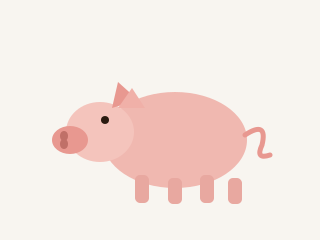
Meat
Pork
Pork is one of the world's most widely consumed meats, valued for its mild sweetness, generous fat, and extraordinary versatility from slow-roasted shoulders to crisp belly and delicate fillet. Breed, diet, and finishing method strongly influence marbling, colour, and the suitability of cuts for roasting, braising, curing, or charcuterie. From Chinese red-braised belly to Spanish jamón, German bratwurst, and American barbecue ribs, pork anchors cuisines across every continent. Understanding cuts, breeds, and regional grading helps match the right product to fresh cooking, smoking, or long curing.
Track this ingredient
Cuts & parts
Baby Back Ribs

Belly

Blood
Bone

Boston Butt

Brain

Cheek
Chop

Collar
Country Style Ribs

Cushion

Cutlet

Ear

Fat
Ground

Ham

Heart

Hock

Intestine

Jowl

Kidney

Leg

Liver
Loin

Neck

Picnic
Ribeye

Rump

Sausage Meat

Shank
Shoulder
Sirloin

Skin
Spare Ribs

Spleen
St Louis Ribs

Stomach
Striploin

Sweetbread

Tail

Tenderloin

Tongue

Trotter
Breeds & varieties
A sample of named types with their own origin and culinary profiles. Showing 10 of 55.


Characteristics
Preparations
Provenance
Sources
Traits
Nutrition and pairings
Nutrition
Typical values per 100 g edible portion. Nutrient names open the reference page.
Nutrition Facts
Per 100 g edible portion
Amount per 100 g
- Total Fat 12.8 g
- Saturated Fat 5.95 g
- Trans Fat 0.2 g
- Monounsaturated Fat 5.62 g
- Polyunsaturated Fat 1.19 g
- Cholesterol 69.4 mg
- Sodium 55.6 mg
- Salt 0.15 g
- Total Carbohydrate 0 g
- Dietary Fibre 0 g
- Total Sugars 0 g
- Complex / starch 0 g
- Protein 20.5 g
- Water 62.3 g
- Energy 197 kcal
- Water 62.3 g
- Protein 20.5 g
- Animal Protein 19.5 g
- Fat 12.8 g
- Saturated Fat 5.95 g
- Monounsaturated Fat 5.62 g
- Polyunsaturated Fat 1.19 g
- Trans Fat 0.2 g
- Vitamins 43.6 mg
- Vitamin A 20 µg
- Vitamin B1 — Thiamine 0.72 mg
- Vitamin B2 — Riboflavin 0.2 mg
- Vitamin B3 — Niacin 5.58 mg
- Vitamin B6 0.4 mg
- Vitamin B7 — Biotin 2.5 µg
- Vitamin B9 — Folate 7.8 µg
- Vitamin B12 — Cobalamin 1.9 µg
- Vitamin C 2 mg
- Vitamin D 0.2 µg
- Vitamin E 0.29 mg
- Vitamin K 1.4 µg
- Minerals 274 mg
- Major Minerals 264 mg
- Trace Minerals 10.3 mg
- Salt 0.15 g
- Sodium Chloride 0.15 g
- Cholesterol 69.4 mg
Vitamins
vitamin-c: 2 · vitamin-b12-cobalamin: 1.9 · vitamin-a: 20 · vitamin-b1-thiamine: 0.72 · vitamin-b2-riboflavin: 0.2 · vitamin-b3-niacin: 5.58 · vitamin-b5-pantothenic-acid: 0.6 · vitamin-b6: 0.4 · vitamin-b7-biotin: 2.5 · vitamin-b9-folate: 7.8 · vitamin-d: 0.2 · vitamin-e: 0.29 · vitamin-k: 1.4 ·
Minerals
Sodium: 55.63 · Potassium: 154 · Calcium: 54 · Iron: 2.4 · Zinc: 2.9 · Iodine: 5 ·
Muscle meat is protein-dense with variable marbling fat.
In the kitchen
Culinary partners and combinations that usually underperform with Pork.
Grading systems
Grades are placed along a shared scale so systems can be compared side by side.
History
Pigs were domesticated independently in the Near East and China, becoming a staple protein as agriculture spread across Eurasia.
Iberian pig husbandry and salt-curing traditions laid foundations for jamón ibérico and enduring European charcuterie culture.
Intensive breeding and railroad distribution expanded commercial pork production across North America.
Lean-genetics programmes and industrial slaughter systems reshaped global pork supply while heritage breeds retained niche demand.