
Nuts
Pine Nut
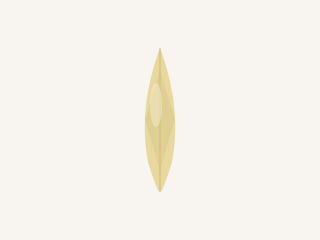
Pine nut is the edible seed of certain Pinus species—not every pine produces kitchen- worthy seeds. Mediterranean stone pine (Pinus pinea) yields the soft, buttery pinoli of classic pesto; Asian species such as Korean pine supply longer triangular kernels that dominate many supermarket bags; pinyon pines of the American Southwest offer small, intense seeds from wild and managed stands. All share a resinous-sweet oiliness and a soft bite, and all go rancid faster than almost any common “nut.” Some batches of certain species have been linked to temporary pine-mouth taste disturbance—buy from careful suppliers. Cooks use pine nuts in pesto, Mediterranean and Middle Eastern rice dishes, and East Asian cookery. Toast gently to bloom aroma; burn them in thirty careless seconds. Good kernels smell sweet and piney; bad ones smell like cardboard or paint. Always refrigerate or freeze—room-temperature pantries punish this oil. Species and origin labelling matter for both flavour and price: Mediterranean pinoli cost more and taste different from bulk Asian kernels. Buy small packs and use them quickly.
Track this ingredient
Cuts & parts

Breeds & varieties
A sample of named types with their own origin and culinary profiles. Showing 10 of 14.


Characteristics
Preparations
Provenance
Sources
Traits
Nutrition and pairings
Nutrition
Typical values per 100 g edible portion. Nutrient names open the reference page.
Nutrition Facts
Per 100 g edible portion
Amount per 100 g
- Total Fat 53.6 g
- Saturated Fat 6.65 g
- Trans Fat 0 g
- Monounsaturated Fat 27.4 g
- Polyunsaturated Fat 13 g
- Cholesterol 0 mg
- Sodium 5.35 mg
- Salt 0.01 g
- Total Carbohydrate 18.3 g
- Dietary Fibre 7.85 g
- Total Sugars 4.21 g
- Complex / starch 5.2 g
- Protein 17.7 g
- Water 4.28 g
- Energy 610 kcal
- Water 4.28 g
- Carbohydrates 18.3 g
- Sugars 4.21 g
- Monosaccharides 2.94 g
- Disaccharides 1.26 g
- Starch 5.2 g
- Amylose 1.3 g
- Amylopectin 3.9 g
- Digestible Starch 4.42 g
- Resistant Starch 0.52 g
- Fibre 7.85 g
- Soluble Fibre 2.75 g
- Insoluble Fibre 5.1 g
- Protein 17.7 g
- Plant Protein 16.8 g
- Fat 53.6 g
- Saturated Fat 6.65 g
- Monounsaturated Fat 27.4 g
- Polyunsaturated Fat 13 g
- Vitamins 80.8 mg
- Vitamin A 20 µg
- Vitamin B1 — Thiamine 0.18 mg
- Vitamin B2 — Riboflavin 0.14 mg
- Vitamin B3 — Niacin 1.81 mg
- Vitamin B5 — Pantothenic Acid 0.45 mg
- Vitamin B6 0.13 mg
- Vitamin B7 — Biotin 13.1 µg
- Vitamin B9 — Folate 34.6 µg
- Vitamin C 2 mg
- Vitamin E 4.22 mg
- Vitamin K 4.2 µg
- Minerals 243 mg
- Major Minerals 233 mg
- Trace Minerals 9.3 mg
- Salt 0.01 g
- Sodium Chloride 0.01 g
Vitamins
vitamin-c: 2 · vitamin-a: 20 · vitamin-b1-thiamine: 0.18 · vitamin-b2-riboflavin: 0.14 · vitamin-b3-niacin: 1.81 · vitamin-b5-pantothenic-acid: 0.45 · vitamin-b6: 0.13 · vitamin-b7-biotin: 13.1 · vitamin-b9-folate: 34.6 · vitamin-e: 4.22 · vitamin-k: 4.2 ·
Minerals
Sodium: 5.35 · Potassium: 174 · Calcium: 54 · Iron: 0.9 · Zinc: 3.4 · Iodine: 5 ·
Nuts pack energy-dense oils, plant protein, and fibre; sodium stays low until salted.
History
Mediterranean peoples harvested stone-pine seeds as a valued oily food.
Roman-era cookery used pine nuts in sauces and stuffed dishes.
Global trade mixed Mediterranean and Asian pine-nut species for different price points.
Pesto culture and Chinese supply chains dominated everyday pine-nut commerce.