
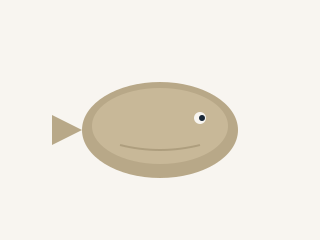
Fish
Dover Sole
Dover sole (Solea solea) is a true sole with firm yet fine white flesh, a clean sweet flavour, and a structure that holds up to classic French pan work better than soft flounders. Whole fish are often grilled or meunière; fillets (delices) suit elegant sauced plates. The dark skin is usually removed; the white skin may stay on for service. It firms slightly after a day or two on ice—traditional fishmongers often prefer it not arrow-fresh soft. Sole meunière, Colbert, and Véronique made it a restaurant status fish of the nineteenth and twentieth centuries. True Dover sole is pricier than lemon sole or flounder sold under looser names—buy from trusted mongers. Cook just until the flesh leaves the bone cleanly; overcooking wastes the premium texture.
Track this ingredient
Cuts & parts



Breeds & varieties
A sample of named types with their own origin and culinary profiles.


Characteristics
Preparations
Provenance
Sources
Traits
Nutrition and pairings
Nutrition
Typical values per 100 g edible portion. Nutrient names open the reference page.
Nutrition Facts
Per 100 g edible portion
Amount per 100 g
- Total Fat 1.86 g
- Saturated Fat 0.37 g
- Trans Fat 0 g
- Monounsaturated Fat 0.78 g
- Polyunsaturated Fat 0.71 g
- Cholesterol 53.2 mg
- Sodium 74.7 mg
- Salt 0.19 g
- Total Carbohydrate 0 g
- Dietary Fibre 0 g
- Total Sugars 0 g
- Complex / starch 0 g
- Protein 19.8 g
- Water 69.7 g
- Energy 95.9 kcal
- Water 69.7 g
- Protein 19.8 g
- Animal Protein 18.8 g
- Fat 1.86 g
- Saturated Fat 0.37 g
- Monounsaturated Fat 0.78 g
- Polyunsaturated Fat 0.71 g
- Vitamins 45.3 mg
- Vitamin A 20 µg
- Vitamin B1 — Thiamine 0.09 mg
- Vitamin B2 — Riboflavin 0.14 mg
- Vitamin B3 — Niacin 3.68 mg
- Vitamin B5 — Pantothenic Acid 0.64 mg
- Vitamin B6 0.36 mg
- Vitamin B7 — Biotin 2.7 µg
- Vitamin B9 — Folate 10.6 µg
- Vitamin B12 — Cobalamin 2.9 µg
- Vitamin C 2 mg
- Vitamin D 1.3 µg
- Vitamin E 0.52 mg
- Vitamin K 0.4 µg
- Minerals 408 mg
- Major Minerals 323 mg
- Trace Minerals 85.3 mg
- Salt 0.19 g
- Sodium Chloride 0.19 g
- Cholesterol 53.2 mg
Vitamins
vitamin-c: 2 · vitamin-b12-cobalamin: 2.9 · vitamin-a: 20 · vitamin-b1-thiamine: 0.09 · vitamin-b2-riboflavin: 0.14 · vitamin-b3-niacin: 3.68 · vitamin-b5-pantothenic-acid: 0.64 · vitamin-b6: 0.36 · vitamin-b7-biotin: 2.7 · vitamin-b9-folate: 10.6 · vitamin-d: 1.3 · vitamin-e: 0.52 · vitamin-k: 0.4 ·
Minerals
Sodium: 74.69 · Potassium: 184 · Calcium: 64 · Iron: 0.9 · Zinc: 0.4 · Iodine: 84 ·
White fish are lean muscle with little intramuscular fat.
History
Coastal and river fishing for dover sole and related species supplied essential protein long before agriculture spread globally.
Salting, drying, smoking, and fermenting extended the shelf life of dover sole and enabled long-distance trade.
Ice preservation and railway transport brought fresh dover sole to inland cities beyond fishing ports.
Industrial freezing, aquaculture, and global logistics made dover sole widely available in international markets.