
Beverage
Cocoa
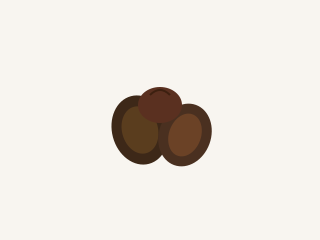
Cocoa is the seed of Theobroma cacao, fermented, dried, roasted, and broken into nibs, liquor, powder, and butter. Fine-flavour groups (Criollo, Nacional, some Trinitario) taste floral and nutty; bulk Forastero and Amelonado carry the world's hot chocolate and cheap bars. Natural cocoa powder is acid and fruity; Dutch-processed is darker, milder, and will not react the same way with baking soda. Drink it as a frothed Mesoamerican-style pot, a European drinking chocolate, or a supermarket cocoa. In the kitchen the powder is a dry flavour, the liquor is a paste, and the butter is fat without much chocolate taste. Single-origin beans behave like coffee in terroir; most grocery cocoa is a blend and should be labelled honestly.
Also known as: Cacao
Track this ingredient
Cuts & parts
Breeds & varieties
A sample of named types with their own origin and culinary profiles.
Characteristics
Preparations
Provenance
Sources
Traits
Nutrition and pairings
Nutrition
Typical values per 100 g edible portion. Nutrient names open the reference page.
Nutrition Facts
Per 100 g edible portion
Amount per 100 g
- Total Fat 0.1 g
- Saturated Fat 0 g
- Trans Fat 0 g
- Monounsaturated Fat 0 g
- Polyunsaturated Fat 0 g
- Cholesterol 0 mg
- Sodium 4.65 mg
- Salt 0.01 g
- Total Carbohydrate 8.53 g
- Dietary Fibre 0 g
- Total Sugars 7.7 g
- Complex / starch 0 g
- Protein 0.53 g
- Water 88.4 g
- Energy 39.1 kcal
- Water 88.4 g
- Carbohydrates 8.53 g
- Sugars 7.7 g
- Monosaccharides 5.4 g
- Disaccharides 2.32 g
- Protein 0.53 g
- Fat 0.1 g
- Vitamins 25.6 mg
- Vitamin A 20 µg
- Vitamin B1 — Thiamine 0.02 mg
- Vitamin B2 — Riboflavin 0.05 mg
- Vitamin B3 — Niacin 0.53 mg
- Vitamin B5 — Pantothenic Acid 0.11 mg
- Vitamin B6 0.02 mg
- Vitamin B7 — Biotin 0.5 µg
- Vitamin B9 — Folate 2.1 µg
- Vitamin C 2 mg
- Vitamin E 0.05 mg
- Vitamin K 0.2 µg
- Minerals 265 mg
- Major Minerals 259 mg
- Trace Minerals 6.6 mg
- Salt 0.01 g
- Sodium Chloride 0.01 g
- Bioactive Compounds 57 mg
- Caffeine 57 mg
Vitamins
vitamin-c: 2 · vitamin-a: 20 · vitamin-b1-thiamine: 0.02 · vitamin-b2-riboflavin: 0.05 · vitamin-b3-niacin: 0.53 · vitamin-b5-pantothenic-acid: 0.11 · vitamin-b6: 0.02 · vitamin-b7-biotin: 0.5 · vitamin-b9-folate: 2.1 · vitamin-e: 0.05 · vitamin-k: 0.2 ·
Minerals
Sodium: 4.65 · Potassium: 207 · Calcium: 47 · Iron: 1.2 · Zinc: 0.4 · Iodine: 5 ·
Beverage bases range from near-water teas to sugar-dense cordials; alcohol adds energy when present.
Grading systems
Grades are placed along a shared scale so systems can be compared side by side.
History
Mesoamerican cultures cultivated cacao for frothed drinks, tribute, and ritual use.
Spanish contact carried cacao to Europe, where sugar sweetened chocolate drinks.
Van Houten cocoa press methods enabled powder and cocoa butter separation for modern chocolate.
Industrial chocolate and drinking cocoa became global mass-market products.