
Nuts
Whole
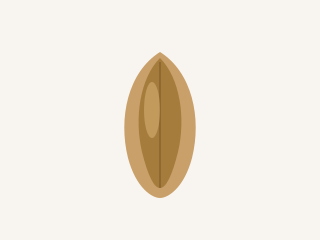
Whole almond names the intact traded unit—either still in its hard shell or an unbroken shelled kernel—before anyone slices, grinds, or presses it. Buying whole gives you control over roast level, grind size, and freshness compared with pre-ground meal of unknown age. Sound lots look uniform, feel heavy for their size, and crack to a sweet, clean kernel without mould dust or insect trails. Cooks hold whole stock for table snacking, controlled chopping, and last-minute roasting when aroma matters. In-shell whole almonds often keep longer because the shell limits oxygen and light; shelled whole kernels are ready to cook but need cooler, tighter storage. Reject lots that rattle hollow, show oily stains through the shell, or smell flat when opened. Whole form is the starting point for every cut and process, not a finished flavouring by itself. Crack or open only what you will use soon, and keep the rest sealed. Premium whole grades earn their price on the cheese board and in pastry topping work where appearance counts.
Track this ingredient
Cuts & parts
Characteristics
Preparations
Traits
Nutrition and pairings
Nutrition
Typical values per 100 g edible portion. Nutrient names open the reference page.
Nutrition Facts
Per 100 g edible portion
Amount per 100 g
- Total Fat 52.8 g
- Saturated Fat 6.67 g
- Trans Fat 0 g
- Monounsaturated Fat 26.5 g
- Polyunsaturated Fat 13.8 g
- Cholesterol 0 mg
- Sodium 4.98 mg
- Salt 0.01 g
- Total Carbohydrate 18.7 g
- Dietary Fibre 8.26 g
- Total Sugars 3.92 g
- Complex / starch 4.74 g
- Protein 18.6 g
- Water 3.86 g
- Energy 573 kcal
- Water 3.86 g
- Carbohydrates 18.7 g
- Protein 18.6 g
- Fat 52.8 g
- Saturated Fat 6.67 g
- Monounsaturated Fat 26.5 g
- Polyunsaturated Fat 13.8 g
- Omega-3 1.38 g
- Vitamins 84.1 mg
- Vitamin A 15 µg
- Vitamin B1 — Thiamine 0.18 mg
- Vitamin B2 — Riboflavin 0.14 mg
- Vitamin B3 — Niacin 1.8 mg
- Vitamin B5 — Pantothenic Acid 0.45 mg
- Vitamin B6 0.13 mg
- Vitamin B7 — Biotin 13.1 µg
- Vitamin B9 — Folate 34.5 µg
- Vitamin C 2 mg
- Vitamin E 12.6 mg
- Vitamin K 4.2 µg
- Minerals 228 mg
- Major Minerals 227 mg
- Trace Minerals 1.5 mg
- Iron 1.5 mg
- Salt 0.01 g
Vitamins
vitamin-c: 2 · vitamin-a: 15 · vitamin-b1-thiamine: 0.18 · vitamin-b2-riboflavin: 0.14 · vitamin-b3-niacin: 1.8 · vitamin-b5-pantothenic-acid: 0.45 · vitamin-b6: 0.13 · vitamin-b7-biotin: 13.1 · vitamin-b9-folate: 34.5 · vitamin-e: 12.63 · vitamin-k: 4.2 ·
Minerals
Whole form averages edible parts as typically consumed.
Grading systems
Grades are placed along a shared scale so systems can be compared side by side.
History
Whole almonds moved in trade as durable in-shell and shelled food across the Near East.
Mediterranean markets distinguished whole table almonds from broken manufacturing stock.
California exporters standardised whole almond grades for long-distance shipment.
Retail whole natural and roasted almonds remained the most visible consumer form.