
Shellfish
Whole
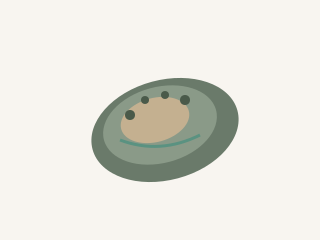
Whole abalone means the live or intact animal in shell—the form of live tanks, premium gifts, and careful home shucking. Live animals should respond to touch on the foot; shells should smell of clean seawater. Shuck with a flat tool, remove the gut mass, and scrub the foot. Keep shells if wanted for service. Live holding needs cold, oxygenated seawater systems—most home cooks buy shucked or frozen meat instead.
Track this ingredient
Characteristics
Preparations
Traits
Nutrition and pairings
Nutrition
Typical values per 100 g edible portion. Nutrient names open the reference page.
Nutrition Facts
Per 100 g edible portion
Amount per 100 g
- Total Fat 5.06 g
- Saturated Fat 0.95 g
- Trans Fat 0 g
- Monounsaturated Fat 1.92 g
- Polyunsaturated Fat 2 g
- Cholesterol 55.4 mg
- Sodium 76.6 mg
- Salt 0.2 g
- Total Carbohydrate 0 g
- Dietary Fibre 0 g
- Total Sugars 0 g
- Complex / starch 0 g
- Protein 19.5 g
- Water 74.1 g
- Energy 133 kcal
- Water 74.1 g
- Protein 19.5 g
- Fat 5.06 g
- Saturated Fat 0.95 g
- Monounsaturated Fat 1.92 g
- Omega-3 0.8 g
- Vitamins 39.1 mg
- Vitamin A 15 µg
- Vitamin B1 — Thiamine 0.1 mg
- Vitamin B2 — Riboflavin 0.14 mg
- Vitamin B3 — Niacin 3.77 mg
- Vitamin B5 — Pantothenic Acid 0.65 mg
- Vitamin B6 0.37 mg
- Vitamin B7 — Biotin 2.7 µg
- Vitamin B9 — Folate 10.9 µg
- Vitamin B12 — Cobalamin 1.2 µg
- Vitamin C 2 mg
- Vitamin D 1.3 µg
- Vitamin E 0.53 mg
- Vitamin K 0.4 µg
- Minerals 366 mg
- Major Minerals 365 mg
- Trace Minerals 1.5 mg
- Iron 1.5 mg
- Salt 0.2 g
- Cholesterol 55.4 mg
Vitamins
vitamin-c: 2 · vitamin-b12-cobalamin: 1.2 · vitamin-a: 15 · vitamin-b1-thiamine: 0.1 · vitamin-b2-riboflavin: 0.14 · vitamin-b3-niacin: 3.77 · vitamin-b5-pantothenic-acid: 0.65 · vitamin-b6: 0.37 · vitamin-b7-biotin: 2.7 · vitamin-b9-folate: 10.9 · vitamin-d: 1.3 · vitamin-e: 0.53 · vitamin-k: 0.4 ·
Minerals
Whole form averages edible parts as typically consumed.
History
Whole abalone were prised from rocks and cooked in shell or after shucking on coasts.
Live abalone tanks in East Asian restaurants made whole animals a banquet centrepiece.
Farmed whole abalone in mesh cages supplied consistent live weights for export.