

Poultry
Breast
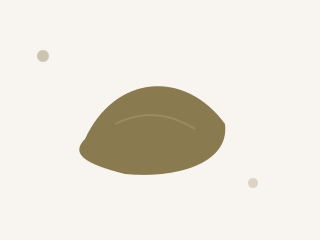
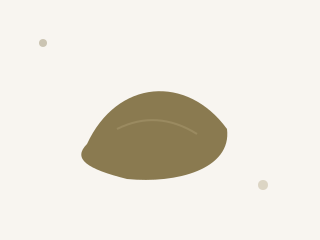
Quail breast is the large pectoral—lean, fast-cooking and the cut most likely to dry. It is delicate mild-game in a tiny bird—usually one or two per person. Bone-in skin-on stays juicier than a thin skinless fillet. Brine or baste, cook to just done, rest, and slice across the grain. Sauce, fat or careful timing matters more than for dark meat. Use hot-fast roast or grill; legs lag breast so spatchcock or dual timing helps. Excellent with grapes, polenta, pomegranate, thyme, bacon and bitter greens.
Track this ingredient
Cuts & parts
Characteristics
Preparations
Traits
Nutrition and pairings
Nutrition
Typical values per 100 g edible portion. Nutrient names open the reference page.
Nutrition Facts
Per 100 g edible portion
Amount per 100 g
- Total Fat 5.25 g
- Saturated Fat 1.74 g
- Trans Fat 0.1 g
- Monounsaturated Fat 2.28 g
- Polyunsaturated Fat 1.23 g
- Cholesterol 94.1 mg
- Sodium 66.3 mg
- Salt 0.14 g
- Total Carbohydrate 1 g
- Dietary Fibre 0 g
- Total Sugars 0.53 g
- Complex / starch 0 g
- Protein 25.6 g
- Water 61.8 g
- Energy 154 kcal
- Water 61.8 g
- Carbohydrates 1 g
- Sugars 0.53 g
- Protein 25.6 g
- Fat 5.25 g
- Saturated Fat 1.74 g
- Monounsaturated Fat 2.28 g
- Polyunsaturated Fat 1.23 g
- Omega-3 0.12 g
- Trans Fat 0.1 g
- Vitamins 37.5 mg
- Vitamin A 15 µg
- Vitamin B1 — Thiamine 0.08 mg
- Vitamin B2 — Riboflavin 0.15 mg
- Vitamin B3 — Niacin 8.18 mg
- Vitamin B5 — Pantothenic Acid 1.01 mg
- Vitamin B6 0.5 mg
- Vitamin B7 — Biotin 2 µg
- Vitamin B9 — Folate 5.9 µg
- Vitamin B12 — Cobalamin 1.2 µg
- Vitamin C 2 mg
- Vitamin D 0.2 µg
- Vitamin E 0.29 mg
- Vitamin K 1 µg
- Minerals 408 mg
- Major Minerals 406 mg
- Trace Minerals 1.5 mg
- Iron 1.5 mg
- Salt 0.14 g
- Cholesterol 94.1 mg
Vitamins
vitamin-c: 2 · vitamin-b12-cobalamin: 1.2 · vitamin-a: 15 · vitamin-b1-thiamine: 0.08 · vitamin-b2-riboflavin: 0.15 · vitamin-b3-niacin: 8.18 · vitamin-b5-pantothenic-acid: 1.01 · vitamin-b6: 0.5 · vitamin-b7-biotin: 2 · vitamin-b9-folate: 5.9 · vitamin-d: 0.2 · vitamin-e: 0.29 · vitamin-k: 1 ·
Minerals
Breast muscle is lean white meat when skinless.
History
Near Eastern and Mediterranean tables ate wild quail as migratory feast food; breast of quail took a named place in that kitchen trade.
Near Eastern and Mediterranean tables ate wild quail as migratory feast food. Cooks treated breast of quail as a cut with its own timing and sides.
As quail cookery specialised, breast was portioned and sold ready for the pan. Retail packs of oven-ready quail brought the bird into home dinner parties.