
Processed
Pectin
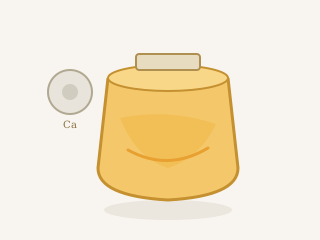
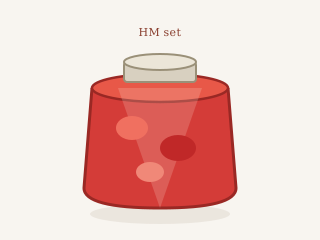
Pectin is a plant cell-wall polysaccharide refined mainly from citrus peels and apple pomace after juice processing. High-methoxyl pectins gel with sufficient sugar and acid for classic jams and jellies; low-methoxyl and amidated types set with calcium at lower sugar, enabling reduced-sugar spreads, fruit preparations, and dairy desserts. Choice of degree of esterification, amidation, and buffer salts controls set temperature, texture, and shear stability. Commercial pectin is a light powder that must be dispersed carefully—often blended with sugar and boiled—to avoid lumps and to fully dissolve before gelling begins. Flavour is mild and slightly fruity when pure. Grades are tailored for confectionery jellies, bakery fillings, beverage cloud, and yoghurt fruit bases. Storage stays dry and cool so moisture does not cake the hydrocolloid or weaken set performance.
Also known as: E440, E440, Pectina, Pectin
Track this ingredient
Explore further


Breeds & varieties
A sample of named types with their own origin and culinary profiles.


Characteristics
Preparations
Provenance
Sources
Traits
Nutrition and pairings
Nutrition
Typical values per 100 g edible portion. Nutrient names open the reference page.
Nutrition Facts
Per 100 g edible portion
Amount per 100 g
- Total Fat 0.2 g
- Saturated Fat 0 g
- Trans Fat 0 g
- Monounsaturated Fat 0 g
- Polyunsaturated Fat 0 g
- Cholesterol 0 mg
- Sodium 40 mg
- Salt 0.1 g
- Total Carbohydrate 85 g
- Dietary Fibre 77 g
- Total Sugars 8 g
- Complex / starch 0 g
- Protein 0.3 g
- Water 8 g
- Energy 180 kcal
- Water 8 g
- Carbohydrates 85 g
- Sugars 8 g
- Monosaccharides 6 g
- Disaccharides 2 g
- Fibre 77 g
- Soluble Fibre 75 g
- Insoluble Fibre 2 g
- Pectin 75 g
- Protein 0.3 g
- Plant Protein 0.3 g
- Fat 0.2 g
- Minerals 180 mg
- Major Minerals 180 mg
- Trace Minerals 0.4 mg
- Iron 0.4 mg
- Salt 0.1 g
Minerals
Sodium: 40 · Potassium: 60 · Calcium: 80 · Iron: 0.4 ·
Citrus or apple pectin is a galacturonan gelling fibre, not jam sugar. High-methoxyl powder is ~85 g soluble fibre, a little residual sugar from the fruit, energy ~180 kcal/100 g. Vitamin C from the original fruit is gone after extraction.
In the kitchen
Culinary partners and combinations that usually underperform with Pectin.
Usually avoid with
Often clash in flavour or tradition
History
Henri Braconnot described pectin as the substance responsible for fruit gel formation.
Industrial pectin extraction from fruit residues began supplying commercial jam makers.
Standardised high-methoxyl pectin powders became pantry and factory staples for preserves.
Low-methoxyl and amidated pectins expanded reduced-sugar and dairy applications worldwide.