
Nuts
Whole Kernel
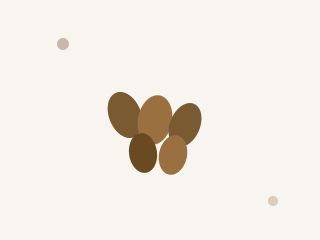
Whole mongongo kernels are complete seed meats from the nutritious nut of Schinziophyton rautanenii from southern African woodlands, not sliced or chipped, sold for snacking, topping, and controlled chopping. Intact surfaces oxidise a little slower than fine pieces and look premium on pastries and salads. Flavour should be rich, oily, and distinctive—traditional staple snack of San and other regional peoples. Toast evenly in a low oven, shaking often, then cool fully before packing or the residual heat will soften the crunch. Use them in cooking such as southern African traditional foods and modern specialty exports in small volumes. Species handling: hard shells cracked traditionally; kernels eaten roasted or pressed. Storage: high oil—keep cool after shelling. Respect cultural food context; supply is wild or smallholder, not industrial orchard scale. Allergen: tree-nut style oilseed; specialty import. In comparison, a cultural staple nut of the Kalahari, not a supermarket bulk nut. Pick out damaged kernels before service; one rancid piece is memorable for the wrong reason.
Track this ingredient
Characteristics
Preparations
Traits
Nutrition and pairings
Nutrition
Typical values per 100 g edible portion. Nutrient names open the reference page.
Nutrition Facts
Per 100 g edible portion
Amount per 100 g
- Total Fat 51 g
- Saturated Fat 6.12 g
- Trans Fat 0 g
- Monounsaturated Fat 25.5 g
- Polyunsaturated Fat 19.4 g
- Cholesterol 0 mg
- Sodium 4.98 mg
- Salt 0.01 g
- Total Carbohydrate 20 g
- Dietary Fibre 7.76 g
- Total Sugars 4.09 g
- Complex / starch 5.11 g
- Protein 18 g
- Water 7.04 g
- Energy 611 kcal
- Water 7.04 g
- Carbohydrates 20 g
- Protein 18 g
- Fat 51 g
- Saturated Fat 6.12 g
- Monounsaturated Fat 25.5 g
- Polyunsaturated Fat 19.4 g
- Omega-3 2.9 g
- Vitamins 76.3 mg
- Vitamin A 15 µg
- Vitamin B1 — Thiamine 0.19 mg
- Vitamin B2 — Riboflavin 0.14 mg
- Vitamin B3 — Niacin 1.82 mg
- Vitamin B5 — Pantothenic Acid 0.45 mg
- Vitamin B6 0.13 mg
- Vitamin B7 — Biotin 13.2 µg
- Vitamin B9 — Folate 34.9 µg
- Vitamin C 2 mg
- Vitamin E 4.26 mg
- Vitamin K 4.2 µg
- Minerals 302 mg
- Major Minerals 301 mg
- Trace Minerals 1.5 mg
- Iron 1.5 mg
- Salt 0.01 g
Vitamins
vitamin-c: 2 · vitamin-a: 15 · vitamin-b1-thiamine: 0.19 · vitamin-b2-riboflavin: 0.14 · vitamin-b3-niacin: 1.82 · vitamin-b5-pantothenic-acid: 0.45 · vitamin-b6: 0.13 · vitamin-b7-biotin: 13.2 · vitamin-b9-folate: 34.9 · vitamin-e: 4.26 · vitamin-k: 4.2 ·
Minerals
Whole form averages edible parts as typically consumed.
History
Peoples of southern African woodlands relied on mongongo nuts as a calorie-dense wild staple.
Ethnographic records documented mongongo’s central role in Kalahari diets.
Development and specialty-food projects explored mongongo oil and kernels for wider markets.