
Meat
Whole
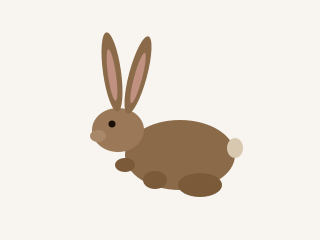
Whole hare means the intact carcass or major joint before further breakdown—used when cooks joint at home or roast large pieces. Darker, stronger and gamier than rabbit, with blood-rich traditional sauces. Season well, protect lean surfaces with fat if needed, and choose roasting versus braising by the animal’s age and collagen. Rest before carving. Older hares need long braise; saddle can roast pink when young.
Track this ingredient
Characteristics
Preparations
Traits
Nutrition and pairings
Nutrition
Typical values per 100 g edible portion. Nutrient names open the reference page.
Nutrition Facts
Per 100 g edible portion
Amount per 100 g
- Total Fat 12 g
- Saturated Fat 5.29 g
- Trans Fat 0.2 g
- Monounsaturated Fat 4.7 g
- Polyunsaturated Fat 0.98 g
- Cholesterol 69.1 mg
- Sodium 61.4 mg
- Salt 0.15 g
- Total Carbohydrate 0 g
- Dietary Fibre 0 g
- Total Sugars 0 g
- Complex / starch 0 g
- Protein 22.3 g
- Water 59.6 g
- Energy 191 kcal
- Water 59.6 g
- Protein 22.3 g
- Fat 12 g
- Saturated Fat 5.29 g
- Monounsaturated Fat 4.7 g
- Polyunsaturated Fat 0.98 g
- Omega-3 0.1 g
- Trans Fat 0.2 g
- Vitamins 37.7 mg
- Vitamin A 15 µg
- Vitamin B1 — Thiamine 0.07 mg
- Vitamin B2 — Riboflavin 0.17 mg
- Vitamin B3 — Niacin 4.69 mg
- Vitamin B5 — Pantothenic Acid 0.51 mg
- Vitamin B6 0.33 mg
- Vitamin B7 — Biotin 2.1 µg
- Vitamin B9 — Folate 9.4 µg
- Vitamin B12 — Cobalamin 1.2 µg
- Vitamin C 2 mg
- Vitamin D 0.2 µg
- Vitamin E 0.35 mg
- Vitamin K 1.7 µg
- Minerals 471 mg
- Major Minerals 469 mg
- Trace Minerals 1.5 mg
- Iron 1.5 mg
- Salt 0.15 g
- Cholesterol 69.1 mg
Vitamins
vitamin-c: 2 · vitamin-b12-cobalamin: 1.2 · vitamin-a: 15 · vitamin-b1-thiamine: 0.07 · vitamin-b2-riboflavin: 0.17 · vitamin-b3-niacin: 4.69 · vitamin-b5-pantothenic-acid: 0.51 · vitamin-b6: 0.33 · vitamin-b7-biotin: 2.1 · vitamin-b9-folate: 9.4 · vitamin-d: 0.2 · vitamin-e: 0.35 · vitamin-k: 1.7 ·
Minerals
Whole form averages edible parts as typically consumed.
History
As hare cookery specialised, whole was portioned and sold ready for the pan. Heritage menus restored blood-thickened hare sauces and saddle service.
Heritage menus restored blood-thickened hare sauces and saddle service; whole of hare took a named place in that kitchen trade.
Game dealers sold oven-ready hare when home butchery declined. Cooks treated whole of hare as a cut with its own timing and sides.