
Nuts
Whole
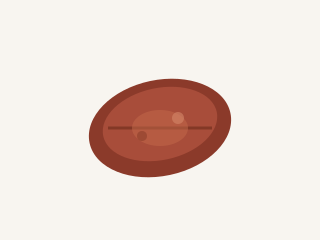
Whole betel nut means the intact harvested product of the seed of the Areca palm (Areca catechu), commonly called areca nut as traded in-shell or as unbroken shelled units. Buying whole gives control over roasting and grind size compared with pre-ground meal of unknown age. When cracked fresh, flavour should be astringent, warming, and not a Western baking nut—used traditionally with betel leaf and lime. Geographic story: South and Southeast Asia, with deep cultural use in betel quids. Kitchen uses include traditional areca quids and cultural preparations rather than Western pastry baking. Handling: traditionally sliced or crushed for quid; not interchangeable with sweet snack nuts. Storage: dried nuts keep in cool dry conditions; quality judged by aroma and hardness. Treat as a culturally specific stimulant seed, not a mild dessert nut; health guidance applies. Allergen: distinct from tree-nut allergens but pharmacologically active; not a children’s snack. In comparison terms, culturally and chemically unlike almond or cashew; do not cook as a mild baking nut. Reject mouldy, insect-damaged, or paint-smelling lots before they enter pastry.
Track this ingredient
Cuts & parts
Characteristics
Preparations
Traits
Nutrition and pairings
Nutrition
Typical values per 100 g edible portion. Nutrient names open the reference page.
Nutrition Facts
Per 100 g edible portion
Amount per 100 g
- Total Fat 49.8 g
- Saturated Fat 7.13 g
- Trans Fat 0 g
- Monounsaturated Fat 26.4 g
- Polyunsaturated Fat 14.4 g
- Cholesterol 0 mg
- Sodium 5.03 mg
- Salt 0.01 g
- Total Carbohydrate 17.5 g
- Dietary Fibre 8.18 g
- Total Sugars 3.88 g
- Complex / starch 4.82 g
- Protein 18.9 g
- Water 3.82 g
- Energy 583 kcal
- Water 3.82 g
- Carbohydrates 17.5 g
- Protein 18.9 g
- Fat 49.8 g
- Saturated Fat 7.13 g
- Monounsaturated Fat 26.4 g
- Polyunsaturated Fat 14.4 g
- Omega-3 1.44 g
- Vitamins 90.2 mg
- Vitamin A 15 µg
- Vitamin B1 — Thiamine 0.17 mg
- Vitamin B2 — Riboflavin 0.13 mg
- Vitamin B3 — Niacin 1.7 mg
- Vitamin B5 — Pantothenic Acid 0.42 mg
- Vitamin B6 0.12 mg
- Vitamin B7 — Biotin 12.3 µg
- Vitamin B9 — Folate 46.9 µg
- Vitamin C 2 mg
- Vitamin E 5.76 mg
- Vitamin K 5.7 µg
- Minerals 347 mg
- Major Minerals 345 mg
- Trace Minerals 1.5 mg
- Iron 1.5 mg
- Salt 0.01 g
Vitamins
vitamin-c: 2 · vitamin-a: 15 · vitamin-b1-thiamine: 0.17 · vitamin-b2-riboflavin: 0.13 · vitamin-b3-niacin: 1.7 · vitamin-b5-pantothenic-acid: 0.42 · vitamin-b6: 0.12 · vitamin-b7-biotin: 12.3 · vitamin-b9-folate: 46.9 · vitamin-e: 5.76 · vitamin-k: 5.7 ·
Minerals
Whole form averages edible parts as typically consumed.
History
Areca nut chewing with betel leaf was established across South and Southeast Asian societies.
Classical and medieval Indian sources document areca in ritual and social exchange.
Trade networks carried areca nuts widely through the Indian Ocean world.
Public-health scrutiny of areca use coexisted with continued traditional consumption in many regions.