
Nuts
Whole
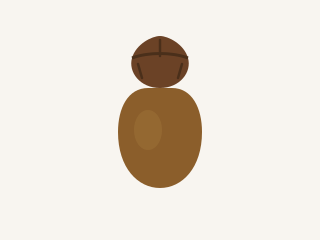
Whole acorn means the intact harvest unit—usually still in shell—as gathered or traded before cracking and milling. Buying whole lets you control shelling, leach water, dry time, and grind size instead of trusting anonymous bagged flour. Sound nuts feel heavy, show tight caps scars, and lack weevil exit holes. Once cracked, meats still need species- appropriate leaching before they become mild kitchen food. Whole lots store cooler and drier than open meal, but moisture inside a closed shell can still spoil a bin if the crop was wet. Sort aggressively: floaters, mouldy caps, and powdery interiors never improve in a soak. Foragers often mix oak species in one mast year; separate high-tannin reds from milder whites when possible so leach schedules match. Whole stock is the starting form for traditional staple processing, not a ready snack.
Track this ingredient
Cuts & parts
Characteristics
Preparations
Traits
Nutrition and pairings
Nutrition
Typical values per 100 g edible portion. Nutrient names open the reference page.
Nutrition Facts
Per 100 g edible portion
Amount per 100 g
- Total Fat 53.1 g
- Saturated Fat 6.72 g
- Trans Fat 0 g
- Monounsaturated Fat 28.4 g
- Polyunsaturated Fat 13.7 g
- Cholesterol 0 mg
- Sodium 4.72 mg
- Salt 0.01 g
- Total Carbohydrate 18.8 g
- Dietary Fibre 7.85 g
- Total Sugars 4.14 g
- Complex / starch 4.83 g
- Protein 17.9 g
- Water 4.2 g
- Energy 584 kcal
- Water 4.2 g
- Carbohydrates 18.8 g
- Protein 17.9 g
- Fat 53.1 g
- Saturated Fat 6.72 g
- Monounsaturated Fat 28.4 g
- Polyunsaturated Fat 13.7 g
- Omega-3 1.37 g
- Vitamins 78 mg
- Vitamin A 15 µg
- Vitamin B1 — Thiamine 0.19 mg
- Vitamin B2 — Riboflavin 0.14 mg
- Vitamin B3 — Niacin 1.87 mg
- Vitamin B5 — Pantothenic Acid 0.46 mg
- Vitamin B6 0.14 mg
- Vitamin B7 — Biotin 13.6 µg
- Vitamin B9 — Folate 35.9 µg
- Vitamin C 2 mg
- Vitamin E 4.38 mg
- Vitamin K 4.3 µg
- Minerals 326 mg
- Major Minerals 325 mg
- Trace Minerals 1.5 mg
- Iron 1.5 mg
- Salt 0.01 g
Vitamins
vitamin-c: 2 · vitamin-a: 15 · vitamin-b1-thiamine: 0.19 · vitamin-b2-riboflavin: 0.14 · vitamin-b3-niacin: 1.87 · vitamin-b5-pantothenic-acid: 0.46 · vitamin-b6: 0.14 · vitamin-b7-biotin: 13.6 · vitamin-b9-folate: 35.9 · vitamin-e: 4.38 · vitamin-k: 4.3 ·
Minerals
Whole form averages edible parts as typically consumed.
History
Foraging peoples across oak ranges processed acorns into staple calorie foods after leaching tannins.
Korean and East Asian cuisines developed acorn jelly and starch products (dotorimuk traditions).
Indigenous acorn processing knowledge was documented while settler agriculture displaced oak mast staples in many regions.
Foraging revival and Korean-food interest returned acorn flour and jelly to specialty pantries.