
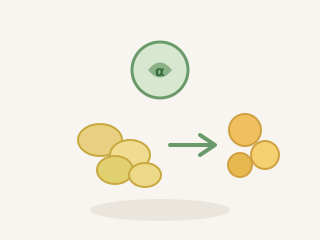
Processed
Amylase
Amylase is a starch-hydrolysing enzyme used in baking, brewing, syrup manufacture, and fruit processing to break amylose and amylopectin into maltose and dextrins. In dough it frees fermentable sugars for yeast, softens crumb over shelf life, and adjusts viscosity in batters and mashes. Commercial preparations come from fungal, bacterial, or cereal sources with different temperature and pH optima—fungal alpha-amylase for bread; bacterial thermostable amylases for liquefaction; malt-derived beta-amylase for brewing. Powder and liquid enzyme concentrates are dosed in parts per million of flour or mash.
Also known as: Amylase / Diastatic Enzyme, Amylase, Amylase, Amylase
Track this ingredient
Explore further


Breeds & varieties
A sample of named types with their own origin and culinary profiles.





Characteristics
Preparations
Provenance
Sources
Traits
Nutrition and pairings
Nutrition
Typical values per 100 g edible portion. Nutrient names open the reference page.
Nutrition Facts
Per 100 g edible portion
Amount per 100 g
- Total Fat 0.5 g
- Saturated Fat 0 g
- Trans Fat 0 g
- Monounsaturated Fat 0 g
- Polyunsaturated Fat 0 g
- Cholesterol 0 mg
- Sodium 160 mg
- Salt 0.4 g
- Total Carbohydrate 76 g
- Dietary Fibre 1.5 g
- Total Sugars 1 g
- Complex / starch 72 g
- Protein 12 g
- Water 6 g
- Energy 360 kcal
- Water 6 g
- Carbohydrates 76 g
- Protein 12 g
- Fungal Protein 8 g
- Fat 0.5 g
- Vitamins 2.85 mg
- Vitamin B1 — Thiamine 0.15 mg
- Vitamin B2 — Riboflavin 0.2 mg
- Vitamin B3 — Niacin 2.5 mg
- Minerals 266 mg
- Major Minerals 265 mg
- Trace Minerals 1 mg
- Iron 1 mg
- Salt 0.4 g
Vitamins
vitamin-b1-thiamine: 0.15 · vitamin-b2-riboflavin: 0.20 · vitamin-b3-niacin: 2.5 ·
Minerals
Sodium: 160 · Potassium: 80 · Calcium: 25 · Iron: 1.0 ·
Food-grade fungal or bacterial amylase is a protein enzyme, usually standardised on a malt or starch carrier. It is not a sweetener. This profile is a typical diluted bakery amylase: modest protein from the enzyme, starch from the carrier, 0 vitamin A/C fruit pattern.
History
Malt and chewed grains supplied natural amylases in early beer and bread fermentation.
Anselme Payen described diastase, founding scientific study of starch-degrading enzymes.
Industrial enzyme makers isolated fungal and bacterial amylases for textile and food uses.
Bakeries adopted fungal alpha-amylase to standardise flour gassing power and crumb softness.
Thermostable bacterial amylases transformed starch liquefaction for glucose and high-fructose syrups.